Tolerable
My physical therapist keeps asking me one question, and it’s the same one your business needs you to answer.
I am rebuilding a shoulder.
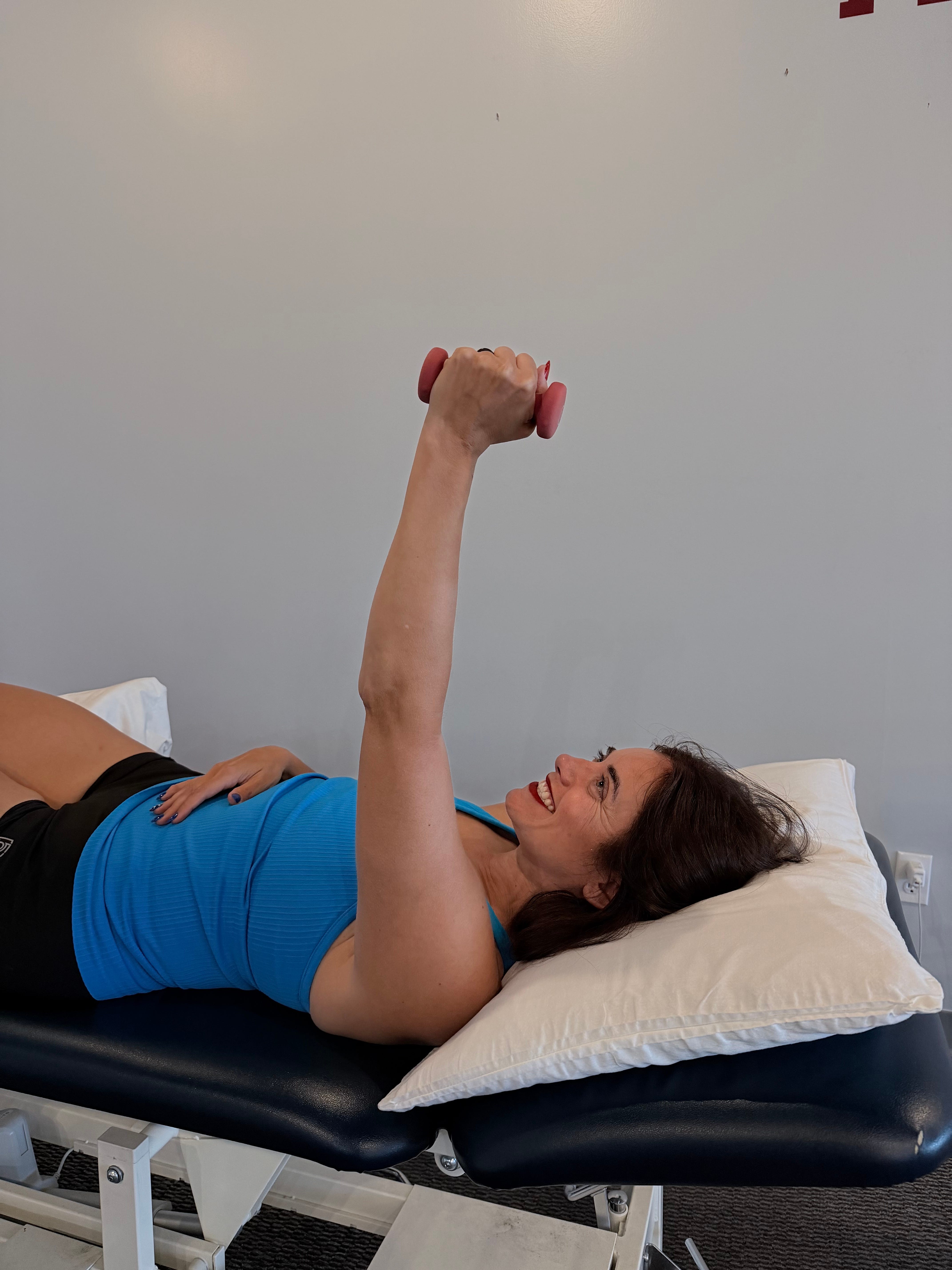
Every few weeks my arm reaches a place it could not reach before, some new inch of range that used to be a wall. Or instant tears.
And every time we get there, my physical therapist asks me the same thing.
Not "does it hurt." Not "are you okay."
But, "is this tolerable?"
The first dozen times I just answered. Yes.
Mostly.
Sort of.
Then the word started to poke on something in my brain. Tolerable. Not painless. Not comfortable. Tolerable.
She was not asking me to avoid the discomfort. She was asking me to stay inside it long enough to heal, and to tell her the second it tipped into damage.
That is a very precise place to live.
And once I noticed it, I started seeing it everywhere.
Because most people are running a business, or a life, that is exactly that. Tolerable.
Not painful enough to quit.
Not good enough to celebrate.
Just survivable.
And survivable is the most dangerous condition there is, because nothing about it forces you to move.
Here is what my shoulder taught me. Tolerable is two completely different situations wearing the same word.
There is the tolerable of a repair. Discomfort sitting on top of something that is actively knitting back together.
It has a direction.
It has a job.
You want to live right at the edge of it, because the edge is where you build. Too little load and the tissue never gets the message. That kind of tolerable is tuition. You are paying for something.
And then there is the other tolerable.
The kind with nothing knitting underneath. Discomfort you have simply gotten used to.
The client who pays two weeks late every single month but always, eventually, pays.
The pricing that covers your costs and not your future.
The 55-hour week that is not burning you out today.
The offer that converts just well enough to keep the lights on and never well enough to change your life. None of it hurts enough to act on.
All of it is quietly costing you. That kind of tolerable is not tuition. It is a slow leak.
Same word. Opposite outcomes. The entire goal is telling them apart.
And here is the cruel part.
Acute pain is a gift.
Acute pain makes you call someone. It makes you cut the client, kill the offer, leave the room. You act because you cannot not act.
Tolerable never gives you that.
Tolerable is a fantastic anesthetic.
You can run a slowly dying business for years on tolerable, because no single Tuesday is bad enough to force a decision. You wake up inside it, you get through it, you wake up inside it again. Nobody stages an intervention over "fine."
So how do you tell which one you are actually in. A few questions I have started asking myself, stolen directly from the woman fixing my arm.
Is anything being repaired.
PT discomfort sits on top of tissue that is rebuilding. Look under your hard thing and name what is being built. If the answer is nothing, you are not healing. You are enduring, and calling it growth.
Is the range expanding.
In rehab, last month's ceiling is this month's floor. I tolerate more because I can do more. If the hard thing has been exactly the same size for a year, that is not a recovery. That is a holding pattern with decent branding.
Did you choose it, and would you choose it again today.
I show up to my appointment on purpose.
The discomfort is scheduled.
Most tolerable situations were never chosen at all. They were defaulted into and then renewed by nobody. When did you last pick your situation on purpose.
If nothing changes, does tolerable hold, or does it get worse.
A hard season has an end you can point to.
A slow leak just costs a little more every month until you cannot remember what full capacity felt like. One is weather. The other is erosion.
Now for the part nobody wants to hear.
Sometimes the problem is that things are too tolerable.
You are not stuck because change is hard.
You are stuck because staying is not hard enough yet.
People do not move when the new thing gets attractive. They move when the current thing gets unbearable.
So if you have been circling the same decision for a year, the fix might not be more courage. It might be less anesthetic.
Stop numbing the tolerable.
Let yourself feel the full bill. Add up what the late-paying client actually costs you in a year, in hours and in the better clients you cannot take because of them.
Make the tolerable intolerable, on purpose, so you will finally do the thing you already know you need to do.
That is not self-punishment. That is diagnosis. You are turning the volume back up on a signal you have been muting.
And sometimes the opposite is true.
Sometimes you are in a genuinely brutal passage and the only correct move is to stay in it and refuse to bail.
The tell, again, is direction.
If you are reaching new levels, if the thing you could not do last quarter is getting a little more possible, the pain is tuition and you keep paying it.
If you are carrying the same weight in the same spot with no new range to show for it, it is a bill, and you should stop paying.
My arm hurts more some weeks than it did at the start.
But it also does things it could not do at the start. That is the difference.
Growing hurts. So does dying. You are allowed to check which one you are doing.
The mistake is treating tolerable as an answer.
"It's tolerable, so I'll stay."
It was never an answer. It is a checkpoint.
My physical therapist does not ask the question so I will settle there. She asks so we can decide, out loud, whether to hold, push harder, or back off before something tears.
You deserve to be asked that question too.
So ask it.
About the client, the offer, the routine, the whole tolerable arrangement you have stopped noticing because it stopped hurting.
Not "is this painful." It almost never is. That is the trap.
Ask if it's tolerable. Then ask the only question that matters after that.
Tolerable in the direction of what.


